How to Hit Your Daily Protein Goal Without Blowing Your Calories
It is late in the day. You finish logging dinner and realize you have already used all of your calories for the day, but you are still short of your protein target. Should you add a quick snack, drink a shake, or accept that today was not perfect? The best solution is usually not a last-minute rescue. It is to use a realistic protein range, understand how protein and calories work together, and spread protein across the day so your goal is easier to reach.
How Much Protein Do You Actually Need?
There is no perfect protein number for everyone. A useful target depends on your body size, training, goal, and whether you are maintaining weight, gaining muscle, or losing fat. A large review of 49 resistance-training studies involving 1,863 adults found that higher protein intake helped people gain more muscle and strength. The average benefit leveled off at about 0.7 grams per pound [1]. This does not mean that eating more than that is harmful or useless. It means the average muscle-building benefit became smaller beyond that point in the studies reviewed. A sports nutrition position statement recommends about 0.6 to 0.9 grams per pound per day for most active adults [2]. In practice, a working range of about 0.7 to 1.0 grams per pound is simple, realistic, and flexible for many people who lift weights.
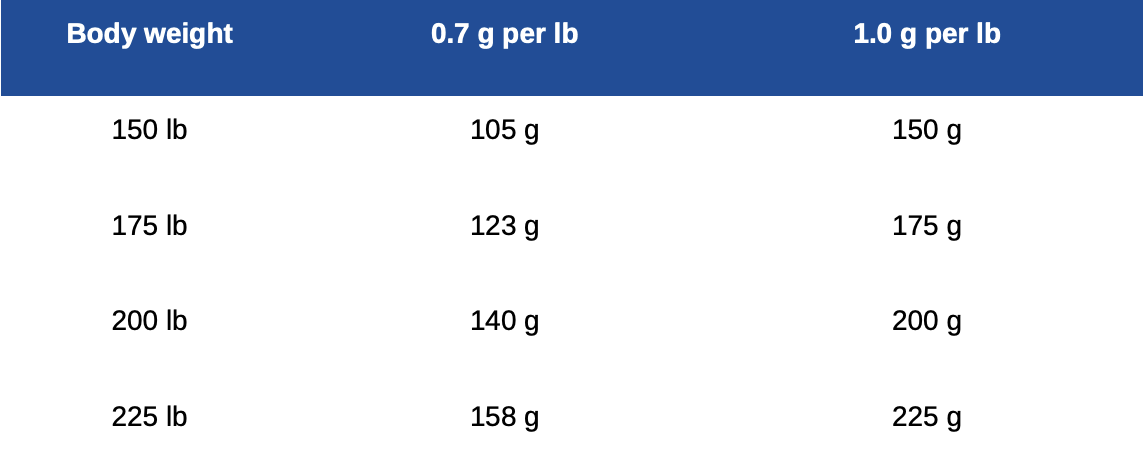
These are starting ranges, not pass-or-fail cutoffs. For example, a 200-pound person may aim for 200 grams per day, but finishing at 150 grams on a busy day does not mean muscle growth is not happening.
Protein vs calories for Fat Loss
Protein helps you build and keep muscle. Calories influence whether your body weight tends to go down, stay stable, or go up over time. When you consistently eat fewer calories than your body uses, body weight decreases. When you consistently eat more, body weight increases [3]. That creates a practical tradeoff. If you are already at your calorie target, adding several hundred calories late at night just to reach an ambitious protein number may reduce or erase the calorie deficit you planned for the day. Protein becomes especially important during a demanding fat-loss phase. Lean, resistance-trained people may need more protein when calories are low because keeping muscle becomes harder as the diet gets more aggressive [4]. That is a reason to plan protein earlier, not necessarily a reason to force down extra food at bedtime.
What to Do When You Are Short on Protein
Every situation will be slightly different for everyone, but you can use the guide below based on your own circumstances.
You still have calories available - Add a lean, convenient protein source that fits the remaining calories. Good options include Greek yogurt, cottage cheese, egg whites, lean meat, tuna, tofu, or a protein shake.
You are near your calorie target and already reached about 0.7 g per lb - Close the day and move on. Missing a higher target occasionally is not a reason to turn a solid fat-loss day into a calorie surplus.
You are near or above your calorie target and well below your usual range - Treat the day as feedback. Do not panic or try to punish yourself tomorrow. Pre-plan a higher-protein breakfast and lunch.
Make Protein Easier to Hit
The easiest way to reach your protein target is to stop saving most of it for dinner. Spreading protein across three or four meals gives you more opportunities to make progress toward the total. A practical serving for many active adults is about 20 to 40 grams of high-quality protein per meal [2]. Larger people or people with high daily targets may need more at some meals.
Choose a realistic range. Start near 0.7 grams per pound if you are new to tracking or need a manageable first step. Move higher when your training, appetite, or fat-loss requires it.
Plan the first half of the day. Breakfast and lunch are where many people fall behind. Decide on those meals before the day becomes busy.
Build each meal around a protein anchor. Choose the main protein first, then add carbohydrates, fats, fruit, vegetables, and sauces that fit your calorie target.
Keep one emergency option available. A ready-to-drink shake, Greek yogurt, cottage cheese, deli turkey, tuna packet, or prepared chicken can prevent a hectic day from turning into a last-minute scramble.
Use leaner protein sources when calories are tight. Chicken breast, turkey breast, white fish, tuna, shrimp, egg whites, nonfat Greek yogurt, low-fat cottage cheese, tofu, and protein powder provide a high amount of protein for relatively few calories.
Review patterns, not single days. If you repeatedly finish 30 to 50 grams short, the problem is probably the meal plan. Adjust breakfast, lunch, and snacks instead of relying on willpower at night.
Simple Protein Ideas by Meal
Breakfast - Aim to secure 25-40 g before the workday gets busy. Greek yogurt with fruit; eggs plus egg whites; protein oats; cottage cheese bowl. You can also use our 20 high-protein breakfast ideas for 500 cals or less article.
Lunch - Choose the protein portion first, then build the rest of the meal. Chicken bowl; turkey sandwich with extra meat; tuna wrap; tofu stir-fry.
Dinner - Use dinner to finish the day instead of adding all the protein that you missed on before. Lean beef; chicken; fish; shrimp; pork tenderloin; tofu or tempeh.
Snacks - Keep one option at work, in your bag, or at home. Protein shake; Greek yogurt; cottage cheese; jerky; deli turkey. You can also use our High Protein Desserts and Snacks: Satisfy Your Sweet Tooth While Hitting Your Goals guide.
If you want a complete guide on protein sources based on your goal, check our Best Protein Sources for Cutting & Bulking (Bonus 10 Meal Ideas)
Final Takeaway
You do not need to hit the same protein number every day to make progress. What matters is building a repeatable pattern that keeps you close to a useful range most of the time. Set a realistic target, plan protein earlier in the day, keep convenient options available, and use leaner foods when calories are limited. When one day falls short, learn from it and improve the next day instead of turning a relatively good deficit day into a surplus just to hit a protein number.
We understand that all of this could be confusing and somewhat hard to manage; that’s why applying for coaching with Aspire Fit has been the solution for more than 500 busy professionals to reach their fitness goals and achieve amazing body recomposition results.
Apply for coaching with Aspire Fit here!